Scorpion Control in Arizona: What Every Homeowner Needs to Know
If you live in Arizona, you’ve either seen a scorpion in your home or you know someone who has. That moment when you flip on the bathroom light at 2am and see one on the wall is something you don’t forget. Here’s what you need to know about scorpion control in Arizona, why professional treatment works, and how to protect your home and family.
Key Takeaways
- Arizona has 30+ scorpion species but the bark scorpion is the dangerous one you need to worry about
- Scorpions glow under UV light making nighttime inspections with a blacklight essential for finding them
- Professional scorpion control works differently than regular pest control using specific products and application methods
- Treatment costs $150-$400+ per service depending on property size and infestation severity
- Monthly service provides best protection especially during Arizona’s scorpion season (April-October)
Why Arizona Has a Scorpion Problem
Let’s start with why Arizona is basically scorpion headquarters. Understanding this helps you realize why control is necessary, not optional.
Desert Climate Is Perfect for Scorpions
Arizona’s hot, dry climate is exactly what scorpions evolved for. They thrive in temperatures that would kill most insects. During summer when it’s 115°F outside, scorpions are completely comfortable hunting at night and hiding during the day.
Our monsoon season (July-September) triggers scorpion activity. The moisture brings out their prey (crickets, roaches, spiders), which brings out scorpions looking for food. Heavy rains also flood them out of their hiding spots, pushing them into homes.
We Keep Building in Their Territory
Arizona’s massive growth means we’re constantly building homes in areas that were pure desert. Scorpions lived there first. Construction disturbs their habitat, but they don’t leave – they move into the new homes.
Even established neighborhoods have scorpions because the desert is everywhere around us. Your property might back to desert, sit near a wash, or have natural desert landscaping. All of this provides scorpion habitat.
They Hide in Plain Sight
Scorpions are nocturnal. During the day, they hide under rocks, in block wall crevices, under landscaping, inside stacked firewood, in roof tiles, behind exterior light fixtures, and inside outdoor storage. You can have a serious scorpion problem and never see one during daylight hours.
At night they come out to hunt. This is when they end up inside homes, walking across floors, climbing walls, and generally terrifying homeowners.
The Bark Scorpion: Arizona’s Dangerous Species
Arizona has 30+ scorpion species, but only one is medically significant: the Arizona bark scorpion.
What Makes Bark Scorpions Dangerous
Bark scorpions are the most venomous scorpions in North America. Their sting causes severe pain, numbness, tingling, difficulty breathing (in some cases), muscle twitching, and can be especially dangerous for children, elderly, and people with health conditions.
Most healthy adults survive bark scorpion stings fine, but it’s intensely painful for 24-48 hours. For young children or elderly individuals, it can require emergency room treatment.
How to Identify Bark Scorpions
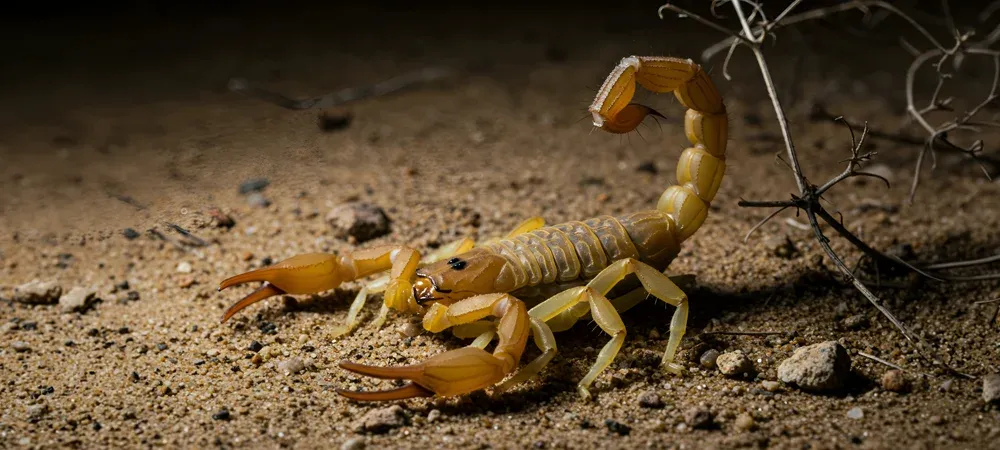
Bark scorpions are smaller than other Arizona scorpions (2-3 inches including tail), tan or light brown color, slender body and thin pincers (other scorpions have thick pincers), and can climb walls and ceilings (other Arizona scorpions typically can’t).
If you see a scorpion climbing your wall, it’s almost certainly a bark scorpion. The others are ground-dwelling and can’t climb smooth surfaces.
Where Bark Scorpions Live
Bark scorpions are found throughout Arizona but are most common in Phoenix metro area, Scottsdale and North Phoenix, Tucson and surrounding areas, and anywhere with established trees and moisture.
They love areas near water – desert washes, canals, retention basins, properties with pools, and anywhere with regular irrigation.
Signs You Have Scorpions
Most people discover their scorpion problem by seeing one. But there are warning signs even before that first encounter.
Direct Sightings
Seeing one scorpion means there are more. Scorpions are solitary but if conditions are right for one, they’re right for many. Seeing scorpions inside your home, spotting them on exterior walls at night, finding them in your garage or outdoor storage, or seeing them near your pool or outdoor living areas all indicate an active problem.
If you’re seeing multiple scorpions regularly, you have an infestation that needs professional treatment.
Finding Them with a Blacklight
Scorpions glow bright blue-green under ultraviolet (blacklight) light. This is the single best way to find them. Walk your property at night with a UV flashlight and you’ll see how many you actually have.
Most Arizona homeowners are shocked the first time they do this. You might think you have 2-3 scorpions. A blacklight inspection reveals 20+.
Increase in Other Pests
Scorpions hunt crickets, roaches, spiders, and other insects. If you’re seeing a lot of these prey insects, you probably have scorpions too even if you haven’t seen them yet.
An increase in cricket activity especially indicates conditions scorpions love.
Living Near Desert or Washes
If your property backs to natural desert, sits near a wash or canal, has natural desert landscaping, or is near undeveloped land, you’re in prime scorpion territory.
These aren’t just risk factors – they’re almost guarantees you have scorpions around your property.
New Construction Nearby
New construction within a half-mile of your home stirs up scorpion populations. They get displaced and move into surrounding established neighborhoods looking for new territory.
If development is happening near you, expect increased scorpion activity for 1-2 years.
What Professional Scorpion Control Includes
Scorpion control is specialized. It’s not the same as general pest control, though many companies treat them similarly. Here’s what effective scorpion control actually involves.
Property Inspection and Assessment
Good companies start with a thorough inspection including blacklight inspection at night to locate scorpions, identifying entry points into your home, checking conducive conditions (harborage areas, moisture, prey insects), inspecting roof areas, eaves, and upper walls, and checking outdoor storage and landscape features.
This inspection tells them what they’re dealing with and where treatment needs to focus.
Exterior Perimeter Treatment
The foundation of scorpion control is treating the exterior perimeter of your home. This creates a barrier scorpions have to cross to get inside.
Treatment includes applying residual insecticide around the entire foundation (3 feet up, 3 feet out), treating all entry points (doors, windows, utility penetrations, cracks), applying product to exterior walls up to roof line, and treating roof areas and eaves where scorpions travel.
The products used are specifically effective on scorpions, not just general insecticides.
Interior Treatment
If scorpions are getting inside, interior treatment includes treating baseboards and entry points, treating garage interior thoroughly (scorpions love garages), applying product to interior wall voids, and spot treating areas where scorpions have been seen.
Interior treatment is targeted, not blanket spraying. The goal is creating barriers at key entry points.
Exclusion Recommendations
Good companies identify how scorpions are getting in and recommend exclusion measures like sealing gaps around doors and windows, filling cracks in exterior walls and foundation, screening vents and other openings, fixing torn window screens, and installing door sweeps and weatherstripping.
Exclusion is critical. Treatment alone can’t keep scorpions out if your home has major entry points.
Follow-Up and Monitoring
Scorpion control requires ongoing monitoring. Monthly service during scorpion season (April-October), bi-monthly or quarterly during cooler months, regular blacklight inspections to monitor population, and adjusting treatment based on activity.
One-time treatments rarely solve scorpion problems. The population needs consistent pressure over time.
When You Need Scorpion Control
Some situations require immediate professional treatment. Others benefit from preventive service before problems start.
You’re Seeing Scorpions Inside
If scorpions are getting inside your home, you need treatment now. One inside is concerning. Multiple sightings mean you have an active problem requiring immediate attention.
Don’t wait until someone gets stung.
You Have Young Children or Vulnerable Family Members
Even if you haven’t seen scorpions yet, if you have young children, elderly family members, or anyone with health conditions that could complicate a sting, preventive treatment is worth it.
The risk isn’t worth the gamble in Arizona. Most families with young kids maintain year-round scorpion control.
You Live in High-Risk Areas
If your property backs to desert, sits near washes or canals, has natural desert landscaping, or is in North Scottsdale/Phoenix foothills, you’re in high scorpion territory.
Preventive treatment makes sense before you have problems.
Scorpion Season Is Starting
April marks the beginning of scorpion season in Arizona. Starting monthly treatment in April and maintaining it through October provides protection during peak activity months.
Many Arizona homeowners start service in March before activity ramps up.
You’re Moving Into a New Home
New homes in Arizona often have scorpion problems initially because construction disturbed their habitat. Starting service immediately when moving in prevents that first terrifying encounter.
What Scorpion Control Costs in Arizona
Pricing varies significantly based on property size, service frequency, and infestation severity.
One-Time Treatment
Initial or one-time scorpion treatments typically cost $250-$500 for average homes, $500-$800 for larger properties or severe infestations. This includes thorough exterior and interior treatment with commercial-grade products.
One-time treatments help knock down populations but rarely solve problems permanently.
Monthly Service
Monthly scorpion control (recommended April-October) typically costs $150-$250 per month for average homes, $250-$350 per month for larger properties.
Annual cost for 7 months of monthly service: $1,050-$1,750.
Quarterly Service
Some homeowners opt for quarterly service year-round at $200-$300 per quarter, totaling $800-$1,200 annually.
This works for properties with lighter scorpion pressure or as maintenance after monthly service knocked down populations.
What Affects Your Cost
Property size (square footage and perimeter), current infestation level (light vs. heavy), property complexity (multiple structures, extensive landscaping), accessibility (ease of treating roof areas, back walls), and service frequency (monthly vs. quarterly).
Choosing a Scorpion Control Company
Not all pest control companies effectively handle scorpions. Here’s what to look for.
Scorpion-Specific Expertise
Ask specifically about their scorpion control methods. Companies that just treat scorpions like any other pest won’t get results. Look for companies that do nighttime blacklight inspections, use scorpion-specific products and application methods, understand scorpion biology and behavior, and treat roof areas and upper walls (where many companies skip).
Licensed and Experienced
Verify Arizona pest control licensing and insurance, ask how long they’ve been doing scorpion control, and request references from customers with scorpion problems.
Experience matters enormously with scorpions.
Realistic Expectations
Be wary of companies promising “scorpion-free guarantees.” No company can guarantee zero scorpions in Arizona – it’s just not realistic.
Good companies promise significant reduction and control, ongoing monitoring and adjustment, and retreatment if activity continues beyond normal.
Service Details in Writing
Get detailed written proposals showing service frequency and duration, what’s included in treatment, cost breakdown, and guarantee/warranty terms.
Don’t accept vague verbal promises.
Living with Scorpions in Arizona
Complete elimination of scorpions from Arizona properties isn’t realistic. The goal is control and exclusion keeping them out of your home.
Professional scorpion control combined with exclusion work reduces populations significantly, keeps them outside where they belong, and provides peace of mind for families.
At Fromms Pest Control, we’ve been helping Arizona homeowners deal with scorpions throughout the Phoenix metro area. We understand scorpion behavior, use products specifically effective on bark scorpions, and provide monthly monitoring during peak season.
Our scorpion control service includes thorough exterior perimeter treatment, roof and eave treatment, interior barrier treatment, blacklight inspections to monitor activity, and exclusion recommendations to keep them out.
Ready to protect your home from Arizona’s most concerning pest? Contact us today for a scorpion inspection and detailed treatment proposal. Because no Arizona family should have to worry about scorpions in their home.