Your home might need more protection than you think. Fromms Pest Control helps you get ahead of small issues before they become big, costly ones.

Termite Control Service in Arizona
Subterranean termites are active year-round in Arizona and most homeowners don't know there's a problem until damage is already done. Standard homeowners insurance doesn't cover it.
Fromms Pest Control starts with a certified inspection, then treats using a bait station system that targets the colony at the source rather than just disrupting surface activity. No drilling, no landscaping disruption. Scheduled monitoring keeps your property covered long-term through regular station checks and an annual inspection.
- Certified inspection covering all accessible interior and exterior areas
- Colony-targeted bait system that eliminates termites at the source
- Ongoing monitoring with annual inspection included
- No long-term contracts required
- Highly rated with 350+ five-star reviews
Our owner, Nick Fromm, holds a Qualified Applicator Certification covering wood-destroying organisms. Fromms Pest Control is locally owned and operated, and the same team handles your property from inspection through ongoing monitoring.
Learn More About Our Termite Services:
Termite Control Service Process
Subterranean termites are the most destructive pest in the Arizona, and Termite Control properties face year-round pressure from colonies that can work inside walls, floor supports, and framing for months before any sign appears. is how you stop that damage before it compounds. Mud tubes, swarmers after monsoon rains, and soft or hollow-sounding wood are all indicators that a colony is already active. Getting ahead of it matters.
Here is how the termite control process works:
- Full property inspection covers all accessible interior and exterior areas, including foundation walls, door frames, garage, patio, and exposed wood framing
- Perimeter bait stations are installed in the soil around the perimeter at regular intervals, targeting foraging termites where they travel
- Colony elimination at the source occurs as termites carry the active ingredient back to the colony rather than just disrupting surface activity
- Targeted liquid or foam treatment is applied directly when active termites are found at a specific point in the structure, as a supplement to bait stations
- Monthly monitoring program begins after installation, covering ongoing station maintenance and an annual comprehensive inspection
- No-charge retreatment is provided if a new activity is found during any scheduled visit under the program
WDI inspections are also available for real estate transactions using the NPMA-33 form, which is accepted by mortgage lenders and documents current or past activity from wood-destroying insects.
Why Fromms Pest Control Is the Right Choice for Termite Protection
Fromms Pest Control is locally owned and operated in the Phoenix metro, and the technicians who service your property are consistent visit to visit so nothing gets missed. There are no long-term contracts. If termites show up between scheduled visits, we come back. With 350+ five-star Google reviews and a team that actually picks up the phone, you get reliable service from people who know Arizona termite pressure firsthand and treat your property like it matters.
A Warranty That Actually Has Your Back
When you invest in termite protection, you want to know the coverage doesn't stop the moment the technician leaves. Fromms Pest Control backs every monitoring program with ongoing protection built into your monthly plan, so if termite activity shows up between visits, it gets addressed at no extra charge.
The program runs month to month with no contract, covers regular bait station maintenance, and includes an annual comprehensive inspection that documents your property's termite status. That inspection record alone is worth having, especially when it comes time to sell.

Warning Signs of Subterranean Termite Activity in Your Home
Subterranean termites consume wood from the inside out, which means the most serious damage often happens well before anything looks wrong on the surface. By the time you notice something off, a colony has usually been active for months.
Watch for these signs of termite activity in Termite Control homes:
- Mud tubes running along foundation walls, stem walls, or exposed concrete
- Hollow-sounding wood in door frames, baseboards, or floor supports
- Winged swarmers appearing inside or around the exterior, especially in spring or after monsoon rain
- Discarded wings near windowsills or entry points
- Bubbling or uneven paint on wood surfaces that shows no other cause
- Soft spots or subtle sagging in wood flooring or subfloor areas
Because standard homeowners insurance does not cover termite damage, the financial exposure falls entirely on you. Knowing what to look for early is the first step toward protecting one of your most significant investments.
Frequently Asked Questions
Are your treatments safe for kids and pets?
Yes, of course! Your safety is our top priority. We use products and application methods that are designed to be effective and produce results, while also being safe for humans, pets, and the environment when used as directed. Our technicians are trained to apply treatments with care and responsibility.
Do I need to have my home inspected regularly for termites?
Yes, regular inspections are crucial, especially if you live in an area with a high risk of termite activity. Annual inspections can help identify potential problems early and prevent extensive damage. Termite problems are often hidden from view, so professional inspections are the best way to spot an issue before it becomes severe.
How can I prevent termites from entering my home?
Here are a few preventive measures:
- Keep wood away from your foundation—don’t store firewood, mulch, or wood debris close to your house.
- Seal cracks and gaps in your foundation and around windows, doors, and pipes.
- Repair leaks promptly to reduce moisture in areas like basements and crawl spaces.
- Consider a termite barrier or treatment for additional protection, especially if you live in an area prone to termites.
How do termites enter my home?
Termites enter your home through small cracks or gaps in your foundation, walls, or around pipes and electrical lines. They can also find their way in through wood-to-ground contact or overexposed, untreated areas like wooden decks, fences, or firewood piles.
How long does it take termites to cause damage?
Termites can begin to cause significant damage surprisingly quickly. The exact timeframe depends on factors like the size of the infestation and the type of termites, but in general:
- Subterranean termites (the most common type) can cause visible damage in as little as 3 to 6 months in a heavily infested area. These termites typically start in hidden areas and work their way into the wood of your home, eating it from the inside out.
- Drywood termites may take several years to cause noticeable damage, as they usually infest smaller areas of wood and are more difficult to detect early on.
In the early stages of an infestation, termites often cause little visible damage. The wood they eat from the inside may look normal on the outside, making it easy for homeowners to miss the signs. However, as they continue to feed, structural damage can escalate quickly, compromising the integrity of your home’s framework. It’s crucial to address any signs of termites early, as even a small infestation can lead to significant damage if left untreated. Regular inspections can help catch potential problems before they become costly.
What are the most common types of termites?
There are three primary types of termites that can infest homes and properties: Subterranean, Drywood, and Formosan termites. Each type behaves differently, has unique characteristics, and requires different approaches to control and treatment. Subterranean termites are the most destructive and widespread type of termites in the United States!
What happens if I don’t treat a termite infestation?
If left untreated, termites can cause significant structural damage that could lead to expensive repairs. Over time, termites can weaken beams, flooring, and even the foundation of your home. Early intervention is key to preventing costly damage.
How can I tell if it’s a carpenter ant or a termite?
- Body Shape: Termites have broad, straight bodies with no defined waist; carpenter ants have a narrow, pinched waist.
- Antennae: Termites have straight antennae; carpenter ants have bent (“elbowed”) antennae.
- Color: Termites are pale or light-colored; carpenter ants are dark brown, black, or reddish.
- Wood Damage: Termites eat wood, leaving rough, mud-lined tunnels and mud tubes; carpenter ants tunnel into wood, leaving smooth galleries and piles of sawdust.
- Wings: Termite wings are equal in length and longer than their bodies; carpenter ants have larger front wings and smaller hind wings.
Still unsure? Both Carpenter ants and Termites are dangerous wood-destroying insects!
Please call us as soon as possible to schedule an inspection.
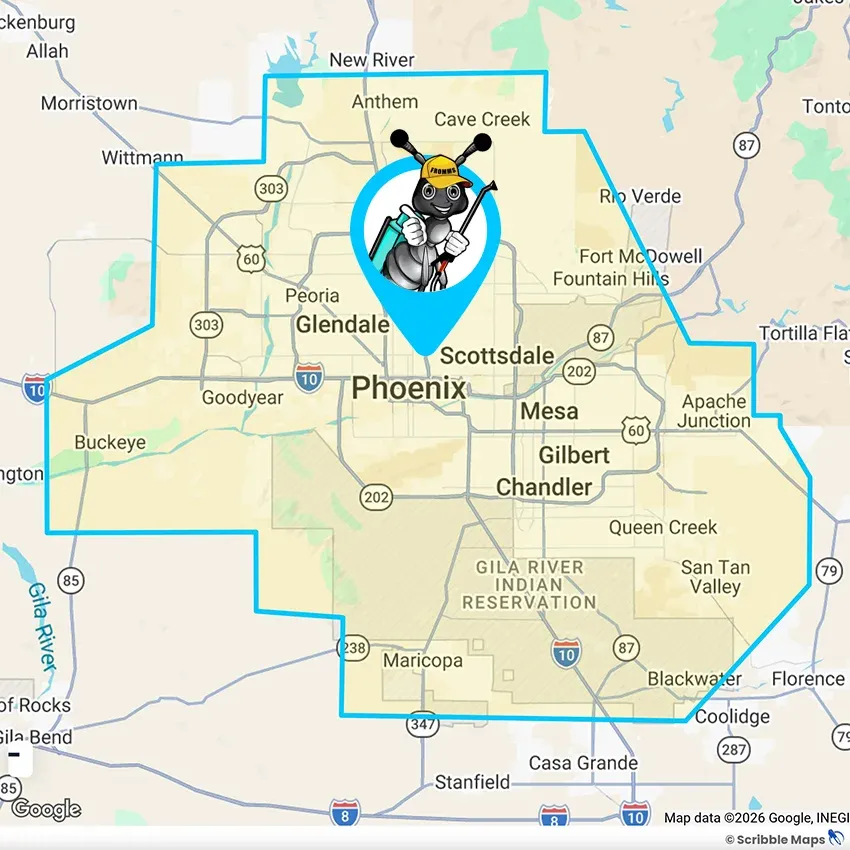
Termite Control Service Area
Fromms Pest Control provides Termite Control services across the Phoenix Valley, including Maricopa, Pinal, and Yavapai counties. Check the cities below to confirm we cover your area, and if you don't see your city listed, reach out anyway, since we may service communities nearby that aren't yet reflected on this page.