
Scorpion Control in Gilbert: What to Do When You Find One
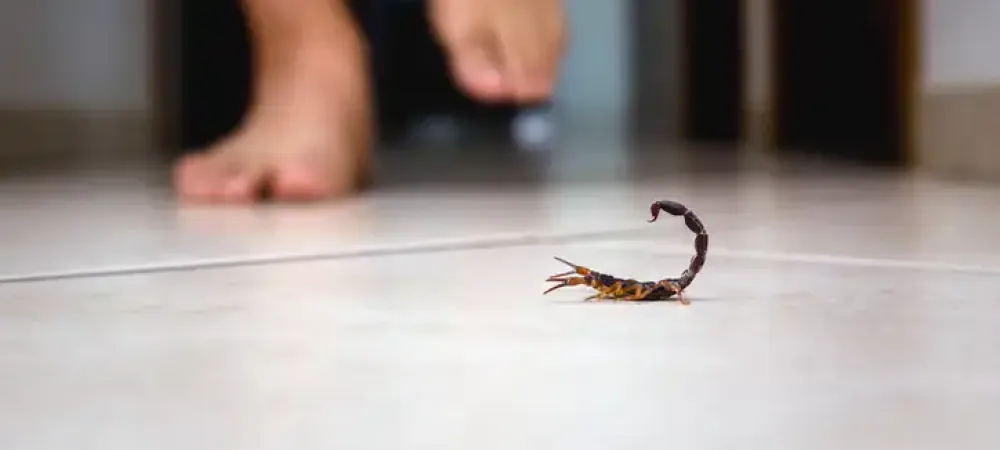
So you just found a scorpion in your Gilbert home. Maybe it was in your garage. Maybe you flipped on the bathroom light at night and there it was on the wall. Or maybe your neighbor mentioned their scorpion problem and now you’re wondering if you have one too. Here’s what every Gilbert homeowner needs to know about scorpions, how to tell if you have a real problem, and what actually works to protect your family.
Key Takeaways
- Finding one scorpion means there are more because they’re solitary but conditions that support one support many
- Gilbert’s San Tan Mountain proximity and canal systems create natural scorpion corridors into neighborhoods
- A blacklight inspection reveals the real situation showing whether you have 2 scorpions or 20+
- Professional treatment works in 48-72 hours creating barriers that last 4-6 months
- Gilbert families prioritize prevention because bark scorpion stings are most dangerous for children
Is What You Found Actually a Scorpion?
Let’s start with the basics because not every creepy crawler is a scorpion.
How to Identify Arizona Bark Scorpions
The scorpions you need to worry about in Gilbert are bark scorpions – the only medically significant species in Arizona. Here’s what they look like:
Size: 2-3 inches long including the tail, smaller than your palm
Color: Tan, light brown, or yellowish – not dark brown or black
Body shape: Slender body with thin pincers (other Arizona scorpions have thick, lobster-like pincers)
Climbing ability: If it’s on your wall or ceiling, it’s almost definitely a bark scorpion – other species can’t climb smooth surfaces
What They Don’t Look Like
Bark scorpions are not the big, dark scorpions you might picture. Those larger, darker scorpions are different species that don’t climb walls and have much less potent venom. If you found a big, chunky scorpion on the ground, it’s probably not the dangerous kind.
The ones you need to worry about are the small, light-colored climbers.
The Glow Test
Here’s the definitive way to know: scorpions glow bright blue-green under UV blacklight. If you have a UV flashlight, shine it on what you found. If it glows, it’s definitely a scorpion.
This glow property is actually how professionals find scorpions during inspections – it’s impossible to miss that bright blue glow against the dark background.
“Why Is This Happening in Gilbert?”
You chose Gilbert for the excellent schools, family-friendly communities, and East Valley lifestyle. Scorpions weren’t part of the plan. Here’s why they’re here anyway.
San Tan Mountains Create Constant Pressure
Gilbert’s southeastern edge sits at the base of the San Tan Mountains and San Tan Regional Park – thousands of acres of pristine Sonoran Desert. This isn’t developed land with reduced scorpion populations. This is natural desert where scorpions thrive.
Every wash, every drainage, every undeveloped corridor between the mountains and your neighborhood serves as a scorpion highway bringing them directly into residential areas.
If you live in southeast Gilbert near Queen Creek or anywhere approaching the San Tan Mountains, you’re dealing with desert-level scorpion populations, not just urban stragglers.
Gilbert’s Development Pattern Stirs Things Up
Gilbert grows outward constantly. That new subdivision going up on Power Road? It’s displacing scorpions that flow into surrounding neighborhoods looking for new territory.
Even established Gilbert neighborhoods see increased scorpion activity when construction happens within a half-mile. The scorpions don’t disappear when land gets bulldozed – they relocate to the nearest suitable habitat, which is often your property.
Canal and Riparian Systems Run Through Gilbert
The Consolidated Canal and various laterals run through Gilbert neighborhoods. These water systems create moisture corridors that attract crickets and roaches, which attract scorpions hunting for food.
Properties within several blocks of canals see elevated scorpion activity year-round, not just seasonally. The canal system also provides connected travel routes allowing scorpions to move throughout Gilbert following water sources.
Your Landscaping Might Be Perfect Scorpion Habitat
Gilbert homeowners often choose desert landscaping with decorative rock, boulders and rock arrangements, minimal grass or traditional plants, and native vegetation for water conservation.
This looks beautiful and saves water, but it also provides ideal scorpion harborage. Every boulder is a hiding spot. Every rock arrangement creates protected spaces. Your water-wise landscaping inadvertently creates perfect scorpion conditions.
“How Do I Know If I Have a Real Problem?”
Finding one scorpion doesn’t necessarily mean you have an infestation. But it does mean you need to investigate further.
The One Scorpion Question
Here’s the reality: if you saw one scorpion, there are more. Scorpions are solitary, not social – they don’t live in colonies. But if conditions are right for one, they’re right for multiple individuals.
Think of it this way: you spotted one scorpion at a random moment. How many others are in your walls, under your landscaping, or in your garage that you haven’t seen yet?
Do a Blacklight Inspection Yourself
The best way to understand your situation is a UV blacklight inspection. You can buy a UV flashlight online for $20-30. Wait until full dark (at least an hour after sunset), and walk your property with the blacklight.
What you’ll find often shocks Gilbert homeowners. You thought you had 2-3 scorpions. The blacklight reveals 15-20+ glowing bright blue throughout your yard and along your walls.
This inspection shows you the real scope of your situation, not just the one or two you happened to spot.
Signs You Have Active Scorpion Problems
Beyond seeing them directly, watch for these indicators:
Nighttime sightings: Seeing scorpions regularly in the evening means they’re comfortable in your area
Inside encounters: Finding scorpions inside your home (bathroom, bedroom, kitchen) indicates they’re entering readily
Multiple family members seeing them: If everyone in your household has spotted scorpions, you have an active population
Neighbor reports: If neighbors mention scorpion problems, assume you have them too even if you haven’t seen them yet
Increase in prey insects: Lots of crickets or roaches means scorpions are likely nearby hunting them
Gilbert Neighborhoods with Known Issues
Some Gilbert areas consistently see higher scorpion activity:
Southeast Gilbert near Queen Creek and San Tan Mountains faces desert-level populations
Val Vista Lakes and communities near water features see elevated activity
Properties along Power Road corridor experience displacement from ongoing construction
Older Gilbert neighborhoods near downtown have established scorpion populations in mature landscaping
If you’re in these areas, assume scorpions are present even if you haven’t seen them yet.
“What Should I Do Right Now?”
You’ve confirmed you have scorpions. Here’s your immediate action plan.
Step 1: Remove Attractants and Harborage
While this won’t eliminate scorpions, it reduces populations you’re supporting:
Clear clutter: Remove stacked firewood, stored items, and debris where scorpions hide during the day
Fix moisture issues: Repair leaking irrigation, address drainage problems, and eliminate standing water attracting prey insects
Reduce outdoor lighting: Use yellow bulbs or reduce unnecessary lighting that attracts insects that attract scorpions
Seal obvious gaps: Weather-strip doors, replace torn screens, and seal visible cracks around your foundation
This doesn’t solve the problem but it helps while you arrange professional treatment.
Step 2: Protect Your Family Immediately
Until you get professional treatment scheduled:
Check shoes and clothing: Shake out anything left outside or in the garage before putting it on
Keep beds away from walls: Pull beds at least 6 inches from walls so scorpions can’t climb from wall to bed
Teach children awareness: Show kids what scorpions look like and teach them not to reach into dark spaces
Use night lights: Keep bathrooms and hallways lit at night so you can see scorpions before stepping on them
Keep a UV flashlight handy: Do quick checks before letting kids or pets into the backyard at night
These precautions minimize encounter risk until professional treatment takes effect.
Step 3: Understand What Professional Treatment Does
Professional scorpion control service works differently than spraying for ants or roaches. Here’s what happens:
Barrier creation: Commercial-grade products applied around your entire home perimeter create barriers scorpions must cross
Residual effectiveness: Products last 30-90 days, continuing to work long after application
Population reduction: Scorpions encountering barriers are affected before reaching entry points
Ongoing monitoring: Regular service maintains barriers as they naturally degrade over time
Treatment doesn’t instantly eliminate every scorpion on your property, but within 48-72 hours you’ll see dramatic reduction in encounters. Within 2-3 weeks, populations drop significantly.
Step 4: Get Multiple Assessments
Don’t call just one company. Get 2-3 professional assessments to understand:
What your actual scorpion population looks like (they should use blacklight inspection)
What treatment frequency they recommend for your specific Gilbert location
What the cost will be for your property size
What their guarantee covers if scorpions return
Different companies approach Gilbert scorpion control differently. Some treat like Phoenix metro areas with monthly service, others recommend less frequent treatment depending on your specific neighborhood.
“Will Professional Treatment Actually Work?”
This is the question every concerned Gilbert homeowner asks. The honest answer is: yes, but with realistic expectations.
What Treatment Can Do
Professional scorpion control in Gilbert dramatically reduces indoor encounters and overall populations. Most Gilbert families go from seeing scorpions weekly to seeing them rarely or never with consistent treatment.
The barriers created around your home prevent most scorpions from entering. The ones that try to cross these barriers are affected before reaching doors, windows, or other entry points.
You’ll notice results within days, with maximum effectiveness after 2-3 weeks of barrier establishment.
What Treatment Can’t Do
Complete elimination isn’t realistic in Gilbert, especially in southeast areas near the San Tan Mountains. You’re living adjacent to unlimited desert populations. The goal is control and exclusion, not elimination.
Even with excellent treatment, you might occasionally see scorpions in your yard. The difference is they stay outside where they belong instead of coming inside where your family lives.
Think of it like this: treatment creates a protected zone around your home. Scorpions exist in the broader environment, but they don’t penetrate your protected space.
How Long Until You’re Protected
Here’s the realistic timeline:
Immediate (Day 1): Barriers are in place, products are active
48-72 hours: Noticeable reduction in scorpion sightings
1-2 weeks: Significant population decrease, fewer encounters
3-4 weeks: Maximum effectiveness, barriers fully established
30-90 days: Products remain effective, barriers protect continuously
After 90 days, barriers need refreshing with follow-up treatment. This is why monthly or bi-monthly service works better than one-time treatment – it maintains consistent protection rather than cycles of treatment and degradation.
Different Results for Different Gilbert Areas
Your results depend partly on where you live:
Southeast Gilbert near mountains needs intensive ongoing service because you’re fighting continuous pressure from desert populations. Monthly treatment during peak season (April-October) is typical.
Central Gilbert gets good results from bi-monthly or quarterly service because populations are more manageable.
Newer developments with less mature landscaping may need seasonal treatment unless they’re near active construction.
Professional companies should assess your specific location and recommend appropriate service frequency, not just sell their standard package.
“What About My Kids and Pets?”
This concern drives most Gilbert families to professional scorpion control. Here’s what you need to know.
Bark Scorpion Sting Risks
Bark scorpion stings are most dangerous for children under 10 and small pets. While most healthy adults handle stings okay (though painfully), young children can have severe reactions requiring emergency treatment.
Symptoms in children can include severe pain and crying, numbness and tingling, difficulty swallowing, muscle twitching, and respiratory difficulty in rare cases.
This risk makes professional scorpion control essential child safety for Gilbert families with young kids, not optional pest control.
Product Safety for Families
Professional scorpion control products are applied primarily outside with limited interior application at entry points. When applied by licensed professionals following label directions, they’re safe for families and pets.
After treatment: Keep kids and pets inside for 2-4 hours while products dry, then normal use resumes. Products bond to surfaces and aren’t picked up by touching treated areas.
This is significantly safer than the ongoing risk of scorpion stings for unprotected homes.
Creating Safe Outdoor Spaces
Treatment allows Gilbert families to reclaim outdoor living. You can let kids play in the backyard, use the pool area at night, and enjoy your patio without constant scorpion vigilance.
The goal isn’t making your yard completely scorpion-free – it’s making it safe enough that normal family use doesn’t pose significant risk.
“How Much Is This Going to Cost?”
Most Gilbert families with active scorpion problems opt for monthly service during summer (when scorpions are most active) and reduce to bi-monthly or quarterly in winter.
What Affects Your Cost
Property size: Larger Gilbert lots cost more to treat thoroughly
Current population: Heavy infestations need more intensive initial treatment
Location: Southeast Gilbert near mountains typically needs more frequent service than central Gilbert
Service frequency: Monthly costs less per visit than one-time treatments
Companies should assess your property and recommend appropriate service frequency for your situation, not oversell or underestimate what you need.
Making the Right Decision for Your Gilbert Home
You’ve found scorpions. You understand the risks. Now you need to decide what to do about it.
Most Gilbert families choose professional scorpion control because the peace of mind is worth the investment. Knowing your kids can walk to the bathroom at night without risk, use the backyard safely, and sleep without scorpions climbing bedroom walls justifies the cost.
At Fromms Pest Control, we’ve been protecting Gilbert homes from scorpions throughout the East Valley for years. We understand the differences between southeast Gilbert near the mountains and central Gilbert, treat family homes with children’s safety as the priority, and provide honest assessments of what your specific property needs.
Our Gilbert scorpion service includes blacklight inspection showing your actual population, property-specific treatment recommendations, monthly or bi-monthly service based on your location and needs, and straightforward pricing with no hidden fees.
Whether you’re in Val Vista Lakes, Agritopia, Morrison Ranch, or southeast Gilbert approaching the San Tan Mountains, we provide scorpion control matching your specific situation.
Found a scorpion and need to know what to do next? Contact us today for a blacklight inspection and honest assessment of your Gilbert property. Because you chose Gilbert for its family-friendly communities and excellent schools – not to worry about scorpions threatening your kids.