Scorpion Control in Phoenix: Protect Your Home
If you’ve lived in Phoenix for more than a season, you’ve either found a scorpion in your house or heard your neighbor’s story about finding one. That moment when you’re walking to the kitchen barefoot at night and see one on the floor changes how you live in your own home. Here’s what Phoenix homeowners need to understand about scorpion control, why our city has it worse than most of Arizona, and what actually works to keep them out.
Key Takeaways
- Phoenix has higher scorpion activity than most Arizona cities due to canal systems, urban sprawl into desert, and year-round warm temperatures
- Bark scorpions are the dangerous ones and they’re everywhere in the Valley, especially North Phoenix and Scottsdale borders
- Professional scorpion control creates barriers that DIY products can’t match in effectiveness or duration
- Monthly service during peak season (April-October) provides best protection for Phoenix homes
- Phoenix’s urban heat island keeps scorpions active longer than cooler Arizona cities
Why Phoenix Has Serious Scorpion Problems
Phoenix isn’t just another Arizona city when it comes to scorpions. We have specific conditions that make the Valley scorpion central.
The Canal System Creates Scorpion Highways
Phoenix has over 180 miles of canal systems crisscrossing the Valley. The SRP canals running through neighborhoods create perfect scorpion corridors with constant moisture from canal water, vegetation along canal banks providing cover, prey insects attracted to moisture, and connected pathways through the entire city.
If you live within a quarter-mile of a canal, you’re in prime scorpion territory. They travel along these water systems and branch into surrounding neighborhoods looking for food and shelter.
Properties backing to canals see the most activity, but scorpions travel surprisingly far from water sources. A canal three blocks away still affects your property.
Desert Sprawl Pushes Them Into Neighborhoods
Phoenix grows outward constantly. Every year brings new developments pushing into what was pure Sonoran Desert. When we bulldoze desert for new subdivisions, the scorpions don’t disappear – they move into the newly built homes and surrounding established neighborhoods.
North Phoenix near the mountains sees this intensely. Developments going up near Desert Ridge, Anthem, and Norterra displace scorpion populations that flow into adjacent areas. You can live in a neighborhood built 20 years ago and suddenly have scorpion problems because of construction happening a mile away.
Even Central Phoenix isn’t immune. Infill development on old desert lots stirs up scorpions that have been living there undisturbed for decades.
Urban Heat Island Extends Activity Season
Phoenix’s urban heat island effect (concrete, asphalt, buildings retaining heat) keeps temperatures higher year-round than surrounding desert areas. This means scorpions stay active longer into fall and become active earlier in spring.
While scorpions throughout Arizona follow seasonal patterns, Phoenix scorpions can be active nearly year-round during warm winters. We rarely get cold enough to fully suppress their activity.
This extended season means Phoenix homeowners need protection for more months than people in cooler Arizona cities.
Desert Washes Run Through Neighborhoods
Phoenix is built across numerous desert washes that flood during monsoons but stay dry most of the year. These washes provide natural scorpion habitat running directly through residential areas.
Homes near washes in areas like Paradise Valley, Ahwatukee, and North Phoenix deal with heavy scorpion pressure because the wash system connects their property directly to desert areas where scorpions thrive.
Mature Landscaping Throughout the Valley
Older Phoenix neighborhoods have 40-60 year old trees, mature landscaping, and established properties. This mature vegetation provides endless hiding spots for scorpions during the day – under rocks, in palm tree bark, inside block wall crevices, and beneath landscape timbers.
Newer developments start with minimal landscaping, but give them 5-10 years and they develop the same scorpion-friendly mature features.
What Makes Phoenix Different from Other Arizona Cities
People moving to Phoenix from Tucson, Flagstaff, or other Arizona cities are often surprised how much worse the scorpion problem is here.
Higher Density Means More Problems
Phoenix’s urban density creates more opportunities for scorpion encounters. More homes closer together mean more potential harborage sites, more outdoor lighting attracting prey insects that attract scorpions, more swimming pools providing water sources, and more people increasing the chances of encounters.
In rural Arizona, you might have scorpions on your property but rarely encounter them. In Phoenix, the density guarantees you’ll cross paths.
Year-Round Warm Temperatures
Phoenix stays warmer year-round than higher-elevation Arizona cities. Flagstaff’s cold winters significantly reduce scorpion activity. Tucson cools down more than Phoenix. The Valley’s consistent warmth keeps scorpions active and reproductive nearly year-round.
This means Phoenix homeowners can’t really take a break from scorpion vigilance. Winter provides some relief, but not the total shutdown colder areas experience.
Irrigation Everywhere
Phoenix properties use more irrigation than other Arizona areas because we’re hotter. All this watering creates moisture that attracts crickets, roaches, and other insects. These prey insects attract scorpions.
The cycle is self-perpetuating. Your landscaping needs water to survive Phoenix heat, but that water creates conditions scorpions love.
Why DIY Scorpion Control Doesn’t Work in Phoenix
Walk into any Phoenix Home Depot and you’ll see shelves of scorpion control products. Homeowners buy them, spray their property, and wonder why scorpions keep appearing. Here’s why DIY fails.
Consumer Products Are Too Weak
Over-the-counter scorpion sprays contain lower concentrations of active ingredients than professional products. Federal regulations limit what concentrations can be sold to consumers.
These products might kill a scorpion on direct contact, but they don’t create lasting barriers. The residual effect (how long the product remains effective after application) is measured in days, not months.
Professional products create barriers lasting 30-90 days. Your Home Depot spray lasts maybe a week before breaking down in Phoenix’s intense heat and UV exposure.
You Can’t Reach Where They Hide
Scorpions spend daylight hours in places you can’t access. Inside block walls, under roof tiles, in attic spaces, behind stucco, and 15 feet up on exterior walls near the roof line.
Professional applicators have equipment reaching these areas. Backpack sprayers with extension wands treat up to 20 feet high. Power sprayers reach roof areas. You’re working with a hand-pump sprayer that reaches maybe 8 feet.
Missing these harborage areas means your treatment is incomplete. Scorpions living in your roof come down at night and walk right past your 3-foot-high barrier.
Application Timing and Technique Matter
Effective scorpion control requires knowing exactly where and when to apply products. Treating too early in the day means UV breaks down products before scorpions are active. Applying to dry surfaces reduces effectiveness compared to slightly damp surfaces. Missing cracks and crevices leaves entry points unprotected.
Professional applicators are trained in these techniques. DIY homeowners spray randomly and hope for the best.
Scorpion Biology Requires Specific Approaches
Scorpions aren’t like ants or roaches that walk through products and die later. Their hard exoskeleton and minimal ground contact mean they need direct contact with sufficient concentrations to be affected.
This requires specific products and application methods. The general “bug spray” approach doesn’t work. You need products that remain active on surfaces where scorpions walk and climb.
Most DIY efforts fail because homeowners don’t understand they’re dealing with a fundamentally different pest requiring a fundamentally different approach.
What Professional Scorpion Control Actually Does
Professional scorpion control service in Phoenix works differently than what most homeowners imagine.
Creating Barriers, Not Just Killing Scorpions
The goal isn’t running around killing individual scorpions. It’s creating chemical barriers around your home that scorpions must cross to get inside. When they cross these barriers, they pick up lethal doses of product.
These barriers go around your entire foundation perimeter (3 feet up walls, 3 feet out from foundation), all entry points (doors, windows, utility penetrations), along roof lines and eaves, and around potential harborage areas near the home.
Scorpions approaching your home encounter these barriers and either turn away or are affected before reaching entry points.
Treating the Vertical Space
Phoenix homes require treatment up to roof level. Bark scorpions climb, and they regularly travel along upper walls and roof areas. Ground-level treatment alone leaves huge gaps.
Professional treatment includes exterior walls from ground to roof, eaves and soffits where scorpions travel, roof tiles and roof surface areas, and upper wall penetrations (vents, light fixtures).
This vertical treatment is what most DIY efforts completely miss.
Blacklight Inspections Show Real Activity
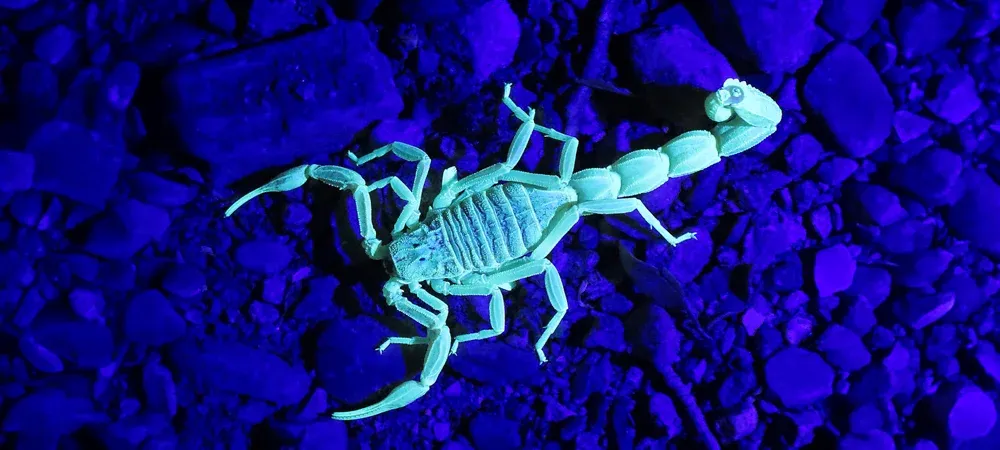
Good companies use blacklight inspections to actually see scorpion populations on your property. Scorpions glow under UV light, making them visible at night when they’re active.
This inspection reveals how many scorpions you actually have (usually way more than you think), where they’re concentrated on your property, travel patterns and entry points, and whether treatment is working over time.
Without blacklight inspection, you’re treating blind.
Ongoing Monitoring and Adjustment
One-time treatments rarely solve Phoenix scorpion problems. The population pressure is too high, with new scorpions constantly moving into the area from surrounding desert, canals, and washes.
Effective control requires monthly service during peak season (April-October), regular monitoring of activity levels, and adjusting treatment based on what inspections show.
Think of it like maintaining a pool. You can’t shock it once and expect it to stay clean all summer. Ongoing maintenance keeps it in good condition.
When Phoenix Homeowners Need Scorpion Control
Some situations demand immediate professional service. Others benefit from preventive treatment before problems start.
North Phoenix and Scottsdale Border Areas
If you live near the mountains (Deer Valley, Desert Ridge, Norterra area), you’re in the highest scorpion activity zone in Phoenix. These areas border extensive desert where scorpion populations are naturally high.
Preventive service makes sense even if you haven’t seen scorpions yet. It’s not a question of if, but when.
Properties Near Canals or Washes
Living within a quarter-mile of SRP canals or desert washes means elevated scorpion risk. These water corridors funnel scorpions directly into your neighborhood.
Properties backing directly to canals or washes need year-round service, not just seasonal.
Homes with Young Children
Bark scorpion stings are most dangerous for young children. If you have kids under 10, the risk calculation changes. Even one sting on a small child can require emergency room treatment.
Most Phoenix families with young kids maintain monthly scorpion service as standard home maintenance, like air conditioning service.
Recently Purchased Homes
New-to-you Phoenix homes often have undiscovered scorpion problems. The previous owners might have been dealing with them without mentioning it, or the home sat vacant allowing populations to build.
Starting service immediately after purchase prevents that first terrifying encounter when you’re still getting settled.
Pool Homes
Pools attract the insects that scorpions hunt. They also provide water sources scorpions need. Pool equipment creates hiding spots. The combination means pool homes typically have higher scorpion activity.
If you have a pool, budget for scorpion control as part of pool ownership costs.
Living with Scorpions in Phoenix
Complete elimination isn’t realistic in Phoenix. We’re living in the Sonoran Desert whether we acknowledge it or not. But professional scorpion control makes a dramatic difference in how often you encounter them and whether they get inside your home.
The goal is pushing them back outside where they belong, creating barriers that protect your living space, and maintaining those barriers consistently through our long scorpion season.
At Fromms Pest Control, we’ve been protecting Phoenix homes from scorpions for years. We understand Valley scorpion patterns, know the high-activity areas by neighborhood, and use treatment approaches specifically effective for Phoenix’s unique conditions – canal systems, urban heat, and nearly year-round activity.