Rodent Control in Peoria, AZ
If you have heard scratching in the walls or found droppings in the garage, there is a good chance rodents have already found a way inside. In the Phoenix Valley, roof rats move through citrus trees, palm fronds, and block walls to reach rooflines and attic spaces. Once inside, they nest in insulation, chew wiring, and contaminate surfaces with droppings that carry real health risks. Waiting to act makes the problem harder and more expensive to fix.
Fromms Pest Control starts every rodent service with a thorough inspection and active trapping, then works with you to choose a long-term solution that fits your property. Rodent control in Peoria includes:
- Roof rat control
- Mouse extermination
- Squirrel removal
- Rodent inspection and activity assessment
- Trap placement and monitoring
- Entry point identification
- Structural exclusion using wire mesh, hardware cloth, caulk, and expanding foam
- Monthly exterior bait station service
A single visit removes what is currently inside, but it does not stop the population pressure coming from neighboring properties and landscaping. Fromms Pest Control offers ongoing monthly service to keep the exterior population suppressed and catch new activity before it becomes a reinfestation. No contract required, and if covered pests return between visits, so do we at no additional charge.
Additional Services in Peoria
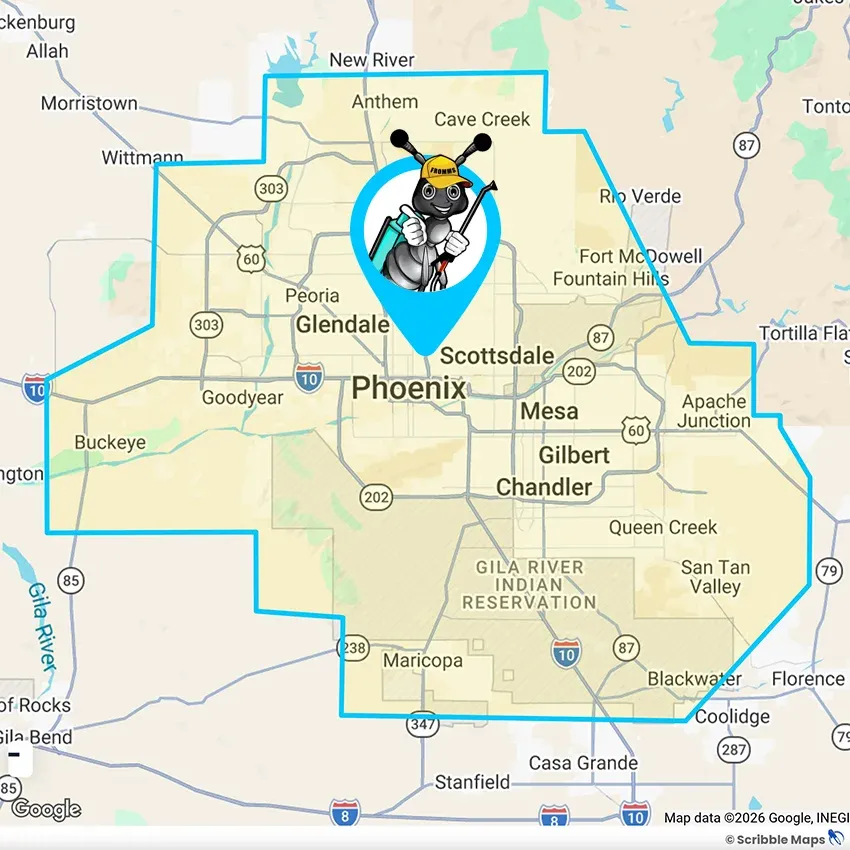
About Our Peoria Rodent Removal Process
Roof rats, mice, and squirrels are persistent in the Phoenix Valley, and the Peoria area is no exception. Citrus trees, block walls, and utility lines give roof rats direct access to rooflines and attic spaces, while mice take advantage of any gap near plumbing penetrations or foundation edges. Rodent Control here is not a single visit and done situation. It requires a structured approach that addresses the active population and then keeps pressure from rebuilding.
Here is how Fromms Pest Control handles it:
- Inspect the structure for signs of activity including droppings, gnaw marks, grease trails, and nesting evidence, while identifying confirmed and likely entry points
- Deploy traps as the primary method for addressing the active population, placed based on what the inspection reveals
- Review findings with you and discuss the two ongoing options: physical exclusion of entry points using wire mesh, hardware cloth, caulk, and expanding foam, or monthly exterior bait station management for properties where full exclusion is not practical
- Begin recurring monthly service to suppress the surrounding population and catch any new activity before it becomes an interior problem
Why Homeowners in the Phoenix Valley Choose Fromms Pest Control
Fromms Pest Control is a locally owned company with technicians who know this environment and show up consistently. The same technician returns to your property on each visit so nothing gets missed and nothing has to be explained from scratch. If covered pests return between scheduled visits, Fromms Pest Control comes back at no additional charge. There are no long-term contracts, no surprise fees, and phones are monitored around the clock every day of the week.
We Offer Peoria Rodent Control and More!
Your Home, One Team, Zero Hassle
When you have rats getting into your attic and mice slipping through gaps near your plumbing, the last thing you want is to track down a separate company for each one. Fromms Pest Control handles rats, mice, and squirrels all under one roof, so you are dealing with a single team, a single point of contact, and one straightforward bill. No juggling multiple schedules, no repeating your situation to different people, no wondering who is responsible for what.
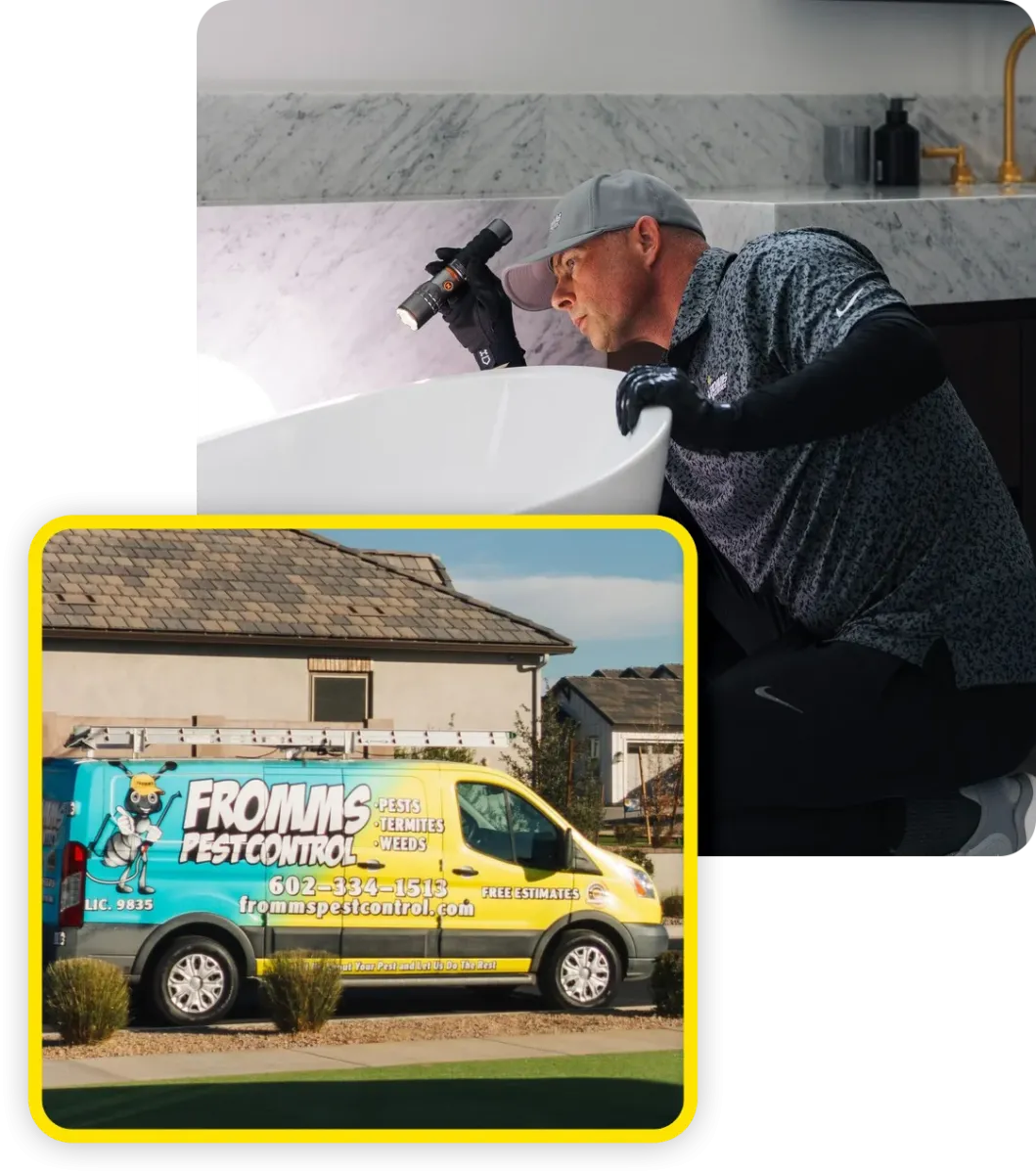
Signs of Rodents in Your Peoria Home
Roof rats, mice, and squirrels are more than a nuisance in Peoria homes. They cause real structural damage, contaminate living spaces, and create risks that get worse the longer they go unaddressed.
Most homeowners do not spot a rodent directly. What they notice first is the sound of movement in the attic at night, gnaw marks on baseboards or food packaging, or droppings along walls and in cabinets. Roof rats are especially good at staying out of sight, using citrus trees, block walls, and rooflines as travel routes before slipping through gaps in the structure that are easy to miss.
Common signs of a rodent problem in Arizona homes include:
- Scratching or scurrying sounds in attic spaces or walls, especially at night
- Droppings along baseboards, in cabinets, or near food storage areas
- Gnaw marks on wood, drywall, plastic piping, or electrical wiring
- Grease trails along walls from repeated travel routes
- Shredded insulation, paper, or fabric used as nesting material
- Citrus fruit on the ground with small bite marks or hollowed-out rinds
- A musty odor in enclosed areas like attics, crawl spaces, or storage rooms
Catching these signs early matters. Chewed wiring is a documented fire risk, and insulation that has been nested in often requires full replacement. Droppings and urine can also carry pathogens including Leptospirosis and Hantavirus, which makes cleanup a health concern beyond just the inconvenience. Knowing what you are dealing with is the first step toward getting it handled the right way.
Effective Peoria Rodent Exclusion Services
Rodents do not need much space to get inside a structure. A mouse can squeeze through an opening the size of a dime, and roof rats are built to climb and probe rooflines, fascia gaps, and utility penetrations until they find a way in. Once they do, the damage to wiring, insulation, and stored materials adds up fast. Exclusion work addresses that problem at the source by closing off the entry points rodents use to access your home in the first place.
Sealing Your Home Against Rodent Entry
Fromms Pest Control inspects your structure for confirmed and likely entry points, then seals them using materials matched to the specific opening. Gaps around plumbing penetrations, roofline joints, and foundation voids each need different approaches, and the right material matters. Here is what the exclusion process covers:
- Inspection of the full structure to identify active and vulnerable entry points rodents are using or likely to use
- Sealing of gaps and penetrations using wire mesh, hardware cloth, caulk, and expanding foam based on the location and material of the opening
- Attention to roof-level access points that roof rats commonly exploit, including fascia gaps, soffit vents, and areas where utility lines enter the structure
- Sealing of plumbing penetrations around sinks and tub drain areas, which rodents can use to move from wall cavities into living spaces
- Regional factors like citrus tree proximity and block wall corridors are considered when prioritizing which areas of the structure face the highest pressure
- Documentation of sealed points so follow-up visits can confirm the work is holding and catch any new vulnerabilities
Exclusion is the most durable way to prevent re-entry because it removes access entirely rather than managing the population around it.