What Professional Pest Inspections Find That Homeowners Miss
You walk through your home regularly. You clean, you organize, you notice when something’s out of place. So when a pest control technician finds termite damage in your attic or a scorpion harborage area you’ve walked past a hundred times, it feels frustrating.
How did you miss it?
The truth is, you didn’t miss it through negligence or lack of attention. You missed it because you weren’t trained to look for it, you didn’t know where to look, and you didn’t have the tools to see what was actually there. Understanding what a professional pest inspection reveals—and why homeowners consistently overlook these same issues—helps you appreciate the value of expert eyes on your property.
Key Takeaways
- Professionals know where pests hide: years of experience reveal patterns homeowners never notice
- Specialized equipment detects invisible problems: moisture meters, thermal imaging, and borescopes find issues you can’t see
- Early detection prevents major damage: finding problems at the beginning saves thousands in repairs
- Pest evidence has a language: professionals read signs that look like normal wear to untrained eyes
- Interconnected issues become clear: professionals see how multiple small problems create major pest vulnerabilities
Why Homeowners Miss What Professionals Find
Before diving into specific examples, let’s understand why this happens. It’s not about being observant or caring about your home. It’s about knowledge, tools, and pattern recognition.
You look at your house every day. That daily familiarity creates something psychologists call “change blindness.” Small, gradual changes—a crack that widens slowly, moisture that accumulates over months, pest evidence that appears incrementally—blend into the background. Your brain filters them out as unimportant.
A professional pest inspection brings fresh, trained eyes. The technician sees your property for the first time and immediately notices things you’ve unconsciously normalized. More importantly, they know what to look for and where to find it.
Think of it like going to the doctor. You might notice you’re tired or have occasional headaches. The doctor recognizes these as symptoms of a specific condition because they’ve seen the pattern hundreds of times. Same principle applies to pest inspections.
The Hidden World of Termite Activity
Termites cause more damage to Arizona homes than any other pest, yet homeowners routinely miss active infestations until damage becomes severe. Let’s look at what professionals find during termite inspections that homeowners overlook.
Mud Tubes in Unusual Locations
Most homeowners know to check their foundation for termite mud tubes. But termites don’t always follow predictable paths. Professional inspectors check:
Behind water heaters and HVAC units where homeowners rarely look. Termites love the consistent moisture from condensation in these areas. The tubes blend into dust and cobwebs, appearing like normal buildup to untrained eyes.
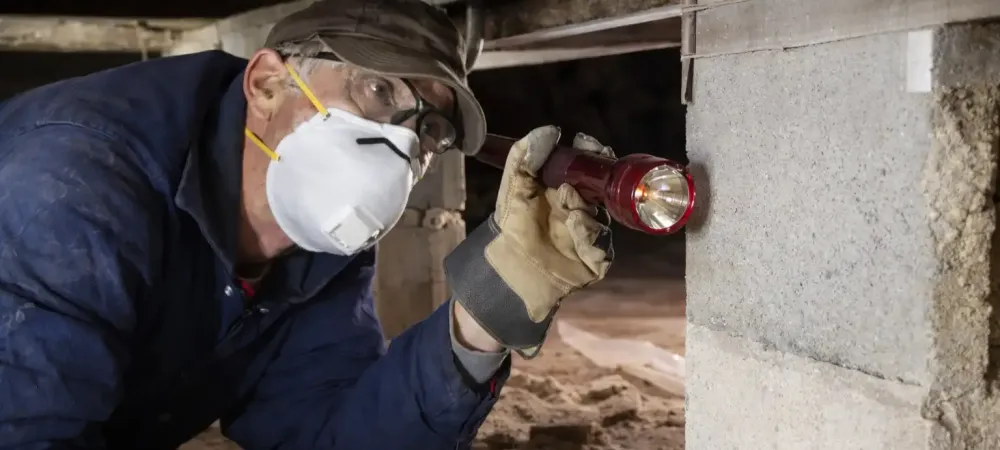
Inside garage door frames where the door track attaches to the wall. This recessed area provides perfect protection for mud tubes. Unless you’re on your hands and knees with a flashlight specifically looking for them, they’re invisible.
Along expansion joints in block walls where the texture and color of mud tubes match the mortar. Homeowners see what looks like old, cracked mortar. Professionals recognize the distinct composition and pattern of termite construction.
On the backside of stucco in areas where stucco has pulled slightly away from the wall substrate. You can’t see these without removing stucco or using inspection cameras. But termites exploit these hidden voids extensively.
Moisture Issues That Attract Termites
Termites need moisture to survive. Professional inspectors use moisture meters to detect humidity levels in wood and wall cavities that feel perfectly dry to the touch.
A homeowner runs their hand along a wall and feels nothing unusual. A moisture meter reveals 18% moisture content in the wood framing—well above the 12-15% threshold that attracts termites. This moisture might come from:
- Slow plumbing leaks inside walls that show no external signs
- Improper grading directing water toward the foundation
- AC condensation collecting in wall voids
- Irrigation systems spraying exterior walls
By the time moisture causes visible damage (staining, warping, mold), termites have often already established activity. The professional pest inspection catches problems at the moisture stage, before termite colonization.
Damage Patterns vs. Normal Aging
Here’s where experience makes the biggest difference. Wood deteriorates naturally from age, weathering, and use. It also deteriorates from termite feeding. To homeowners, damaged wood is just damaged wood.
Professionals recognize termite-specific patterns:
Honeycomb damage inside wood that appears solid externally. Termites eat wood from the inside out, leaving a thin veneer. Tapping sounds hollow, but homeowners might attribute this to normal construction variations.
Mud in galleries mixed with wood fragments in a specific texture. Natural wood rot doesn’t have this characteristic. But unless you’ve seen thousands of termite galleries, you wouldn’t recognize it.
Directional patterns in how wood is damaged. Termites follow the grain in predictable ways. Weather damage, dry rot, and mechanical wear create different patterns.
Timing and location correlation between moisture sources and damage. Professionals notice when damaged wood aligns with plumbing, irrigation, or drainage issues—suggesting termite activity rather than simple aging.
What Scorpion Inspections Reveal
Scorpions are Arizona’s most feared household pest, yet homeowners consistently miss the signs indicating scorpion-friendly conditions. During professional scorpion inspections, technicians find issues homeowners walk past daily.
Harborage Areas in Plain Sight
Scorpions need daytime shelter. They hide in cracks, gaps, and voids that homeowners see but don’t recognize as problematic.
Block wall voids are scorpion apartments. Arizona’s decorative and property-line block walls have cells that provide perfect scorpion habitat. Homeowners see a normal block wall. Professionals see dozens of potential scorpion hiding spots and know exactly which blocks will be occupied.
Expansion joints in stucco wider than 1/16 inch allow scorpion entry. These joints are designed into homes and appear normal. But professionals measure them and recognize when they’ve widened beyond acceptable tolerances.
Gaps under roof tiles where tiles have shifted slightly. From the ground, the roof looks fine. From a ladder with a flashlight, professionals see the 1/4-inch gaps where bark scorpions regularly enter attics.
Landscaping rock directly against foundations creates scorpion harborage. Homeowners see attractive xeriscaping. Professionals see scorpion habitat touching the house—a direct pathway inside.
Prey Insect Populations
Scorpions don’t randomly wander into homes. They follow food sources. Professional inspectors identify prey insect activity that attracts scorpions:
Cricket populations in landscape lighting, irrigation valve boxes, and around outdoor faucets. These crickets look like a minor nuisance. To scorpions, they’re a buffet that justifies establishing territory around your home.
Roaches living in palm trees and outdoor vegetation. Homeowners might never see these outdoor roach populations. But professionals check palm trees, tree bark, and dense vegetation—finding the roach colonies that attract scorpion predators.
Beetles and other insects in mulch, compost, and landscape materials. Professional inspectors recognize when insect activity is high enough to sustain scorpion populations nearby.
The key insight: eliminating scorpions requires eliminating their food sources. Homeowners focus on the scorpions themselves. Professionals identify and address the entire ecosystem supporting scorpion presence.
Entry Points You’d Never Notice
Bark scorpions fit through gaps as thin as 1/16 inch—about the thickness of a credit card. Professional inspectors find entry points homeowners would never consider:
Gaps where utility lines penetrate stucco. The hole was drilled larger than the pipe diameter for easier installation. The gap was never sealed. Homeowners see the pipe and assume it’s properly installed. Professionals see the 1/8-inch gap around the pipe’s circumference.
Weep holes in brick veneer that are supposed to be there for drainage but lack proper screening. Homeowners don’t even notice weep holes exist. Professionals check every single one for proper screening.
HVAC refrigerant line penetrations where the foam seal has degraded from UV exposure. The degradation is gradual over years. Homeowners don’t notice the foam crumbling. Professionals recognize degraded seal material immediately.
Garage door seal deterioration at the corners where the seal doesn’t make complete contact. The door closes and appears sealed. But there’s a 1/4-inch triangle gap at each corner—perfect scorpion entry points.
Case Study: The Gilbert Home With “No Pest Problems”
Let me share a real example that illustrates what professional pest inspections uncover.
The Initial Call
In March 2024, we received a call from a homeowner in Gilbert who wanted a “routine inspection” before listing their home for sale. They’d lived there for eight years and, in their words, “never had any pest problems.” They just needed documentation for the buyer.
The home was well-maintained. Landscaping looked professional. Interior was clean and updated. Everything suggested this would be a quick, straightforward inspection with a clean bill of health.
What the Inspection Found
Our technician started with the standard exterior perimeter walk. Within ten minutes, he’d identified multiple issues the homeowners had never noticed:
Active termite mud tubes behind the AC condenser unit. The tubes ran from soil level up the stucco wall about 18 inches, then disappeared into a crack where the stucco met the foundation. The homeowners walked past this AC unit regularly but had never looked behind it.
Severe moisture issue in the same area from the AC condensate drain. The drain was supposed to connect to the irrigation system but had separated, dumping condensate directly against the foundation. The moisture meter showed 22% moisture content in the wood framing inside that wall—dangerous levels.
Foundation crack approximately 1/8 inch wide running along the back of the house. Termites were using this crack for access. The homeowners knew about the crack but thought it was “just normal settling.”
Gaps under every roof tile along the south-facing exposure. Years of UV exposure and heat had caused the tiles to curl slightly. From the ground, the roof looked fine. From a ladder, our technician could see consistent 1/4-inch gaps under every tile—perfect entry points for roof rats and scorpions.
The Homeowner’s Reaction
The husband’s first response was disbelief. “We’ve lived here eight years and never seen a termite.”
Our technician showed them the mud tubes with his phone camera. Still active, with termites visible moving inside. The damage behind the tube—honeycomb galleries in the wall’s wooden elements—was extensive. This wasn’t a new infestation. It had been active for years.
The wife asked the question we hear constantly: “How did we not see this?”
The Answer
Our technician explained: You weren’t looking for it. You had no reason to go behind the AC unit with a flashlight. You didn’t know that mud tubes this color blend perfectly with desert dust. You didn’t know what moisture levels in wood should be or that you needed to check. You didn’t recognize the foundation crack as an entry point because you didn’t know termites exploit cracks this size.
This isn’t negligence. It’s not stupidity. It’s simply not having the knowledge, experience, and tools that a professional pest inspection brings.
The Resolution
Treatment required:
- Termite colony elimination using liquid treatment
- Repair of AC condensate drainage
- Foundation crack sealing
- Removal of rock from foundation contact
- Roof tile adjustment and gap sealing
Total cost: $2,800 for termite treatment and $1,200 for recommended repairs.
The homeowner’s comment afterward: “If we’d caught this five years ago, the termite treatment alone would have cost a fraction of this. We thought not seeing pests meant we didn’t have pest problems.”
The Tools That Make the Difference
Part of what makes a professional pest inspection more thorough is specialized equipment homeowners don’t own.
- Moisture meters detect humidity in materials before visible damage occurs. A wall that feels dry to your hand might have 20% moisture content internally—attracting termites, causing rot, promoting mold.
- Thermal imaging cameras show temperature differentials that indicate moisture intrusion, air leaks, and sometimes even pest activity in walls. Cold spots might indicate water leaks. Hot spots in unexpected areas might show where insulation has been removed by rodents.
- Borescopes and inspection cameras let professionals see inside wall voids, under insulation, and in other inaccessible areas without demolition. A small hole allows a camera to reveal what’s happening in spaces homeowners can’t access.
- UV flashlights make scorpions fluoresce at night, revealing populations that would otherwise be invisible. Professionals conducting scorpion inspections use these to find and remove scorpions, and to identify high-activity areas requiring treatment.
- Ladder access and willingness to get dirty sound simple, but most homeowners don’t climb on roofs, crawl under houses, or get into attics regularly. Professionals do this on every inspection, seeing areas homeowners rarely access.
Experience Patterns Homeowners Can’t Match
Beyond tools, experience creates pattern recognition that’s impossible to replicate with occasional observation.
A professional inspector has seen thousands of homes. They’ve seen termite damage in every possible location and configuration. They’ve found scorpions in bizarre hiding spots. They’ve traced moisture problems to sources homeowners never suspected.
This experience creates intuition. The inspector walks into your attic and immediately notices the insulation pattern is wrong in one corner—indicating rodent activity. They see a specific type of crack in your stucco and know termites are likely behind it. They notice how your landscaping irrigation is positioned and predict moisture problems before using a moisture meter to confirm.
You can’t develop this pattern recognition from living in one house, even if you’re extremely attentive. It comes from seeing hundreds or thousands of properties and learning what normal looks like versus what indicates problems.
The Interconnected Issues Professionals Recognize
Perhaps the most valuable aspect of a professional pest inspection is seeing how multiple small issues create major pest vulnerabilities.
A homeowner might notice:
- A small plumbing leak under the kitchen sink
- Some cracks in the stucco on the south wall
- Landscape rock against the foundation
Each seems minor and unrelated.
A professional inspector sees:
- The leak creates moisture attracting cockroaches and termites
- The stucco cracks provide entry for moisture and pests
- The rock retains moisture against the foundation and provides scorpion harborage
- All three issues on the same side of the house create a pest superhighway
It’s not any single issue—it’s the combination. Professionals recognize these interconnected vulnerabilities and address them comprehensively rather than treating symptoms individually.
Building Trust Through Expertise
At Fromms Pest Control, our inspection process reflects decades of combined experience in Arizona pest management. Our technicians undergo continuous training on pest biology, behavior patterns, and Arizona’s specific pest challenges.
We’ve conducted thousands of inspections across Phoenix, Gilbert, Scottsdale, Mesa, and surrounding communities. This experience base means we’ve encountered virtually every pest situation Arizona homes present. When our technicians inspect your property, they’re drawing on this collective knowledge.
Our inspection reports detail findings with photos, explanations, and recommendations prioritized by urgency. We don’t just identify problems—we explain why they matter, how they developed, and what addressing them prevents.
We’re also honest about what we find. If your home is in good condition with minimal pest risk, we’ll tell you that. We don’t manufacture problems to sell services. Building long-term relationships with Arizona homeowners requires trust, and trust requires honesty.
Taking Action
If you haven’t had a professional pest inspection recently, now’s the time. Don’t wait for visible damage or pest sightings. Professional inspections find problems before they become obvious—which is exactly when intervention is most effective and affordable.
We recommend annual inspections for all Arizona homes, with quarterly service for properties in areas with high pest pressure. This combination of professional inspection and preventive treatment keeps your home protected year-round.
Contact us today to schedule a comprehensive inspection. We’ll examine your property with trained eyes, specialized tools, and decades of experience—finding and addressing issues before they become expensive problems.
The peace of mind knowing your home has been thoroughly inspected by professionals? That’s worth far more than the cost of the service.