Why Pest Control Requires Multiple Treatments
You schedule pest control. The technician treats your home. A week later, you’re seeing pests again. Did the treatment fail? Should you call and complain?
Probably not. Seeing some pest activity after the first treatment is normal—even expected. Understanding why pest control requires multiple treatments helps homeowners set realistic expectations and work with the process instead of against it.
Key Takeaways
- Pest lifecycles have stages treatments can’t immediately eliminate: eggs and pupae are protected from most pesticides
- One treatment reduces populations but doesn’t break reproduction cycles: follow-up treatments target newly emerged pests before they reproduce
- Residual products break down over time: effectiveness decreases with exposure to heat, UV, and moisture
- Reinfestation pressure is constant in Arizona: outdoor pest populations continuously attempt entry
- Different treatment visits serve different purposes: initial knockdown, follow-up elimination, and ongoing prevention aren’t the same thing
The Lifecycle Problem
This is the main reason pest control requires multiple treatments. Pesticides work on pests at certain life stages but not others.
What One Treatment Actually Kills
When a technician treats your home, the products kill:
Active adult pests: Cockroaches, ants, spiders, and other insects that contact treated surfaces or consume baits.
Nymphs and larvae: Immature pests that are mobile and foraging. They encounter treatments the same way adults do.
Some eggs: Very few pesticides actually kill eggs. Most insect eggs have protective shells that prevent pesticide penetration.
Some pupae: Insects in the pupal stage are essentially in cocoons. They’re not feeding, not moving, and mostly protected from treatments.
What’s left after the first treatment? All the eggs that were already laid. Pupae developing inside protective cases. Hidden populations in areas the treatment didn’t directly reach.
The Two-Week Window
Here’s what happens after your first treatment:
Days 1-3: You see dead and dying pests. Adult insects that contacted treated surfaces are eliminated. The visible population drops dramatically.
Days 4-10: Activity seems minimal. You might think the problem is solved.
Days 10-21: New pests appear. These aren’t survivors of the first treatment. They’re newly emerged from eggs and pupae that were present during the first visit.
This is exactly when the second treatment is scheduled. It’s timed to catch these newly emerged pests before they reach reproductive maturity.
Example: German Cockroach Lifecycle
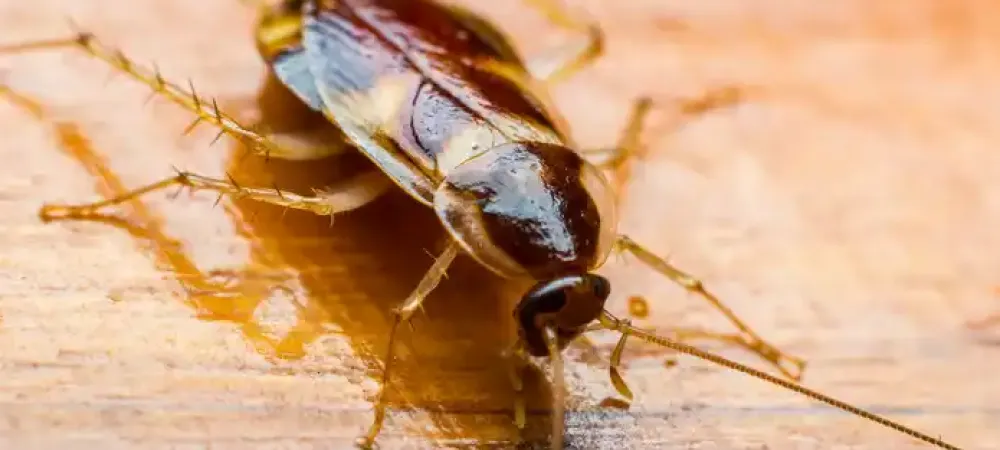
German cockroaches (the most common indoor roach) illustrate this perfectly.
A female carries an egg case containing 30-40 eggs. She protects it until just before hatching—meaning your first treatment doesn’t kill those eggs.
The eggs hatch 2-3 weeks after the first treatment. Nymphs emerge and begin foraging. If there’s no second treatment, these nymphs mature in 6-8 weeks and start reproducing.
One missed treatment cycle means 30-40 new roaches mature and reproduce. Each female produces 4-6 egg cases in her lifetime. The math gets ugly fast.
The second treatment catches those newly hatched nymphs before maturity. No reproduction means no population recovery.
Residual Product Breakdown
Professional pest control products leave residual protection that continues killing pests for weeks or months after application. But this protection doesn’t last forever.
How Residual Products Work
Modern pest control products use microencapsulation technology. The active ingredient is enclosed in microscopic capsules that release slowly over time.
When a pest walks across a treated surface, capsules stick to their body. As the pest grooms itself (and insects groom constantly), it ingests the product. The pest dies, and if it returns to a colony, it may spread the product to other members through contact.
This is why you see dead pests for several days after treatment. The product keeps working even when the technician isn’t there.
What Degrades Residuals
Arizona’s environment is particularly harsh on residual products:
UV exposure: Sunlight breaks down pesticide molecules. Exterior treatments on sun-exposed surfaces may only remain effective for 30-60 days.
Heat: Extreme temperatures accelerate chemical breakdown. Products applied in June when it’s 115°F don’t last as long as the same products applied in October.
Moisture: Irrigation, rain, and humidity wash away or dilute products. Areas that get wet frequently need more frequent treatment.
Surface type: Porous surfaces like unsealed concrete absorb products, reducing surface residual. Non-porous surfaces like tile maintain residual longer.
A product that provides 90 days of control in moderate climates might only provide 45-60 days in Arizona’s harsh conditions.
Why Timing Matters
Follow-up treatments aren’t just about catching new pest emergence. They’re also about maintaining residual protection before the previous treatment completely breaks down.
Quarterly service (every 3 months) is standard because most products maintain effective residuals for 60-90 days. By treating every 3 months, there’s no gap in protection.
Skip a treatment, and you create a window where pests can enter, establish, and reproduce without encountering any pesticide barrier.
Reinfestation Pressure in Arizona
Even if you eliminated 100% of pests inside your home with one treatment, new pests would attempt entry within days.
Outdoor Populations Are Constant
Arizona’s climate supports year-round pest activity. Unlike northern states where winter kills outdoor populations, our mild winters just slow them down.
Your yard has:
- Scorpions hunting in rock landscaping
- Ants establishing colonies in irrigation valve boxes
- Cockroaches living in palm trees and mulch
- Spiders building webs in eaves and corners
- Crickets breeding in landscaping
These outdoor populations constantly probe your home’s perimeter looking for entry points, food, water, and shelter.
Entry Points You Can’t Completely Seal
Even well-maintained homes have gaps:
- Garage doors have necessary clearance for operation
- Doors and windows need some gap for proper function
- HVAC systems require vents and penetrations
- Utility lines create unavoidable openings
You can minimize these gaps, but you can’t eliminate them entirely. Pests will find whatever openings exist.
This is why professional pest control includes perimeter treatments. Treating the exterior barrier reduces the number of pests attempting entry.
But perimeter treatments need renewal as residuals break down. One exterior treatment doesn’t provide permanent protection.
Seasonal Pressure Spikes
Different times of year bring different challenges:
Spring (March-May): Termite swarms, ant colony reproduction, increased general insect activity as temperatures warm.
Summer (June-August): Extreme heat drives pests indoors seeking water and cooler temperatures. Scorpion activity peaks.
Monsoon (July-September): Moisture triggers population explosions in mosquitoes, ants relocating colonies, and increased cockroach activity.
Fall (September-November): Stink bugs, boxelder bugs, and other occasional invaders seek winter shelter indoors.
Winter (December-February): Rodent pressure increases as they seek warmth and indoor food sources.
Multiple treatments throughout the year address these changing pest pressures.
Different Treatments Serve Different Purposes
Not all pest control treatments are the same. Each visit in a treatment series accomplishes different goals.
Initial Treatment: Population Knockdown
The first treatment focuses on immediate population reduction. The technician:
Identifies pest species: Different pests require different products and approaches. Proper identification is critical.
Locates activity areas: Where are pests harborating, nesting, and foraging? Treatment focuses on these areas.
Applies knockdown products: These work quickly to reduce the active adult population you’re seeing.
Establishes perimeter barrier: Exterior treatment reduces new pests entering while interior populations are being eliminated.
Places monitoring stations: These help track activity between visits.
You’ll see immediate results. Dead pests, reduced activity, relief from the problem. But the job isn’t finished.
Second Treatment: Emerging Population Elimination
Scheduled 14-21 days after the first visit, the second treatment targets:
Newly emerged pests: Insects that hatched from eggs or emerged from pupae since the first treatment.
Surviving hidden populations: Pests in areas that were inaccessible during the first visit may now be foraging and encountering treatments.
Residual renewal in critical areas: High-traffic pest areas may need product reapplication.
Adjustment based on results: If certain areas still show activity, treatment focus shifts.
This is the most critical follow-up. Miss this treatment, and newly emerged pests reach reproductive maturity. You’re back to square one.
Third Treatment (If Needed): Complete Elimination
For severe infestations or certain pest types, a third treatment completes the elimination process:
Final emerging generation: Some pests have extended emergence periods. A third treatment catches stragglers.
Colony elimination confirmation: For social insects like ants, the third treatment confirms the colony is eliminated, not just suppressed.
Transition to prevention mode: With active infestation eliminated, treatment shifts to maintaining protection.
Ongoing Maintenance: Prevention
Once the infestation is eliminated, quarterly or bi-monthly service maintains protection:
Perimeter renewal: Exterior barriers are refreshed as residuals break down.
Monitoring for new activity: Early detection prevents new infestations from establishing.
Seasonal adjustments: Treatment focus shifts based on seasonal pest patterns.
Addressing new conditions: Changes to your property that create new pest pressure are addressed.
Think of this like changing your car’s oil. One oil change doesn’t provide lifetime engine protection. Regular maintenance prevents problems.
What Happens If You Skip Follow-Up Treatments
Some homeowners cancel after the first treatment because they don’t see pests anymore. Here’s what typically happens:
The 30-Day Rebound
Week 1-2: Everything seems fine. The first treatment eliminated visible pests.
Week 3-4: You notice a few pests. Just one or two, so you don’t worry.
Week 5-6: Pest activity is back to pre-treatment levels. Sometimes worse.
Week 8-10: Full infestation returns. You call for another first treatment. The cycle repeats.
This pattern costs more than completing the original treatment series. You’re paying for multiple “first treatments” instead of one complete treatment program.
Population Recovery Is Exponential
Pests reproduce exponentially, not linearly. Here’s a simplified example with ants:
After first treatment: 95% of foraging ants eliminated. The colony queen and 200 workers survive in the wall void.
Week 3: The queen has laid 500 eggs. They hatch. 200 workers + 500 new workers = 700 total.
Week 6: Each reproductive ant produces more. The colony now has 1,500 members.
Week 10: Colony size is 3,000+—larger than before treatment.
The second treatment would have eliminated those 200 surviving workers before egg production accelerated. One missed treatment allows exponential recovery.
Species-Specific Treatment Needs
Different pests require different treatment approaches and timing.
Ants
Ant control typically requires 2-3 treatments:
First visit: Bait applications that workers carry to the colony. Perimeter treatment to reduce foraging trails.
Second visit (14-21 days): Verify bait consumption. Treat any new activity areas. Apply additional bait if needed.
Third visit (30-45 days): Confirm colony elimination. Some ant species require extended treatment because colonies are large and widely distributed.
One treatment might eliminate visible foraging ants, but the colony survives and produces new workers.
Cockroaches
Cockroach elimination requires 2-4 treatments depending on severity:
First visit: Apply bait and residual treatments in harborage areas.
Second visit (14-21 days): Catch newly hatched nymphs from eggs that survived the first treatment.
Third visit (30-45 days): Final cleanup of any remaining population. Heavy infestations may require additional visits.
Cockroach egg cases (oothecae) are impervious to most pesticides. Multiple treatments are essential to catch each new generation as it emerges.
Termites
Termite control is fundamentally different from general pest control:
Initial treatment: Liquid soil treatment or bait station installation. This establishes the treatment zone.
Follow-up inspections: Regular monitoring to confirm colony elimination. This can take 3-6 months for baiting systems.
Annual inspections: Even after elimination, annual inspections ensure no new colonies have established.
Termites live in colonies of thousands to millions. Complete elimination takes time. Expecting one treatment to solve a termite problem is unrealistic.
Scorpions
Scorpion control requires ongoing treatment because:
Scorpions live 3-5 years: You can’t eliminate them with one treatment. You’re managing a population, not eliminating a species from your property.
They migrate from neighboring properties: Even if you eliminate all scorpions on your property, new ones arrive from surrounding areas.
Multiple treatments establish barriers: Monthly or bi-monthly service during peak season (April-October) maintains effective protection.
Scorpion control is about reduction and exclusion, not complete elimination. It requires persistent, regular treatment.
The Economics of Multiple Treatments
Single treatments seem cheaper. But they rarely solve the problem completely.
One Treatment vs. Complete Program
Option 1: Single treatment
- Cost: $150-200
- Pests return in 4-6 weeks
- Call for another single treatment: $150-200
- Repeat cycle 4-6 times per year
- Annual cost: $600-1,200
Option 2: Complete initial treatment + quarterly maintenance
- Initial treatment series (2-3 visits): $300-450
- Quarterly maintenance: $400-600 annually
- Annual cost: $700-1,050
- Problem actually stays solved
The complete program costs less and works better.
Hidden Costs of Incomplete Treatment
Beyond service costs, incomplete treatment creates:
Property damage: Termites continue eating. Rodents keep chewing wires. Carpenter ants excavate more wood.
Health risks: Cockroach allergens worsen asthma. Disease-carrying pests remain active longer.
Stress and frustration: Dealing with recurring pest problems affects your quality of life.
Wasted DIY products: Homeowners often buy store products between professional treatments, adding costs without solving the problem.
Complete treatment programs eliminate these hidden costs.
Working With the Treatment Schedule
Understanding why pest control requires multiple treatments helps you work with the process effectively.
Keep Your Appointments
Treatment timing is based on pest biology, not convenience. Rescheduling follow-up treatments by even a week can reduce effectiveness.
If you must reschedule, do it as close to the original date as possible.
Report New Activity
Seeing some pests between treatments is normal. But new activity in different areas or increasing numbers should be reported.
Your pest control company needs this information to adjust treatment approaches. Don’t wait until the next scheduled visit to mention significant new activity.
Follow Preparation Instructions
Some treatments require preparation—clearing areas, removing pets, vacating for a period. Follow these instructions.
Preparation isn’t arbitrary. It ensures treatments can be applied properly and safely.
Maintain Your Property
Professional pest control works best when combined with good home maintenance. Fix leaks, seal gaps, eliminate clutter, and manage moisture.
Treatment eliminates current pests. Maintenance prevents new infestations from establishing between treatments.
The Bottom Line
Pest control requires multiple treatments because pest biology, product limitations, and environmental factors make one-time solutions impossible for established infestations.
The first treatment reduces populations. Follow-up treatments eliminate newly emerging pests and maintain protective barriers. Ongoing service prevents new infestations.
At Fromms Pest Control, serving Phoenix, Gilbert, Scottsdale, Mesa, and surrounding Arizona communities, we explain the treatment process upfront. You’ll know how many visits to expect, why each is necessary, and what results to anticipate.
We schedule follow-up treatments based on pest lifecycles and product residual effectiveness, not arbitrary timelines. The goal is complete elimination and lasting protection, not just temporary relief.
If you’re dealing with pest problems and want a solution that actually works long-term, contact us today for a comprehensive inspection. We’ll explain exactly what pest control for your specific situation requires—including how many treatments and why.
Understanding why multiple treatments are necessary helps you commit to the complete process. And completing the process is what finally eliminates pest problems for good.